
Introduction
Eemerse is an innovative streaming platform that elevates the traditional viewing experience by integrating cloud-based Augmented Reality (AR), Virtual Reality (VR), and 3D content. Similar to Netflix in its user-friendly approach, Eemerse aims to be the premier destination for immersive entertainment. Leveraging proprietary scanning technology, Eemerse can efficiently create and stream 3D objects via the cloud, reducing file sizes and enhancing accessibility.
As the UX/UI Designer, I played a pivotal role in the project’s success, working closely with a cross-functional team and stakeholders. Through rapid iterations and a focus on meeting tight deadlines, we were able to secure the funding in the first demo and are currently pitching to Apple with a high chance of collaboration.
My Role
User Research and Data Analytics
Competitive Analysis
Creating User Personas
Developing User Flows and User Journeys
Building a Comprehensive Design System
Developing a Component Library
Creating Wireframes and Prototypes
Designing Multiple Interface Versions
Conducting Heatmaps and A/B Testing
Collaborating with Cross-Functional Teams and Stakeholders
Iterating Rapidly to Meet Deadlines
Designing Print Materials for Investor Demos
Preparing Materials for Investor Pitches
Problem Statement
The challenge was to create a seamless user experience that makes cutting-edge, cloud-based AR/VR and 3D content accessible to a broad audience. Key issues included:
Complexity of Immersive Technologies: Users may find AR/VR interfaces intimidating.
Content Discovery: Ensuring users can easily find and access immersive content.
Data Size Constraints: Large 3D files can hinder streaming and device performance.
Competitive Landscape: Standing out in a market dominated by established streaming services.
Investor Appeal: Demonstrating the platform’s potential to secure significant funding.
Goals and Objectives
Simplify User Experience
Design intuitive navigation for both traditional and immersive content.Enhance Engagement
Integrate interactive elements that encourage exploration.Optimize Content Delivery
Utilize cloud-based technology to reduce 3D object sizes for efficient streaming.Develop a Robust Design System
Build a scalable library of components for consistency and efficiency.Accelerate Iterations
Work closely with cross-functional teams to rapidly iterate designs based on stakeholder feedback.Create Compelling Investor Pitch Materials
Develop detailed prototypes and data-driven insights to effectively communicate the platform’s value.
User Research and Data Analytics
Surveys and Interviews
General Audience: To gauge interest and familiarity with AR/VR and 3D content.
Tech Enthusiasts: To understand expectations from an immersive streaming platform.
Content Creators: To assess needs for showcasing their work in new formats.
Investors: To identify key factors that influence funding decisions.

Persona 1: Alex Thompson
Age: 28
Occupation: Software Engineer and Tech Enthusiast
Background: Alex is always on the lookout for the latest technology trends. He owns multiple devices, including VR headsets and AR-enabled smartphones.
Goals:
Access high-quality immersive content easily.
Stay updated with the latest in AR/VR experiences.
Frustrations:
Current platforms are fragmented and lack diverse content.
Complex interfaces that require a steep learning curve.
Motivations:
Enjoy cutting-edge technology.
Share experiences with a community of like-minded individuals.

Persona 2: Maria Lopez
Age: 32
Occupation: Marketing Manager and Casual Viewer
Background: Maria enjoys watching movies and series in her downtime. She is curious about AR/VR but hasn’t tried it due to perceived complexity.
Goals:
Find entertainment without technical hassles.
Explore new types of content without investing in expensive equipment.
Frustrations:
Overwhelmed by too many options and complex interfaces.
Concerned about data usage and device storage.
Motivations:
Relax and unwind with engaging content.
Try new experiences if they are easily accessible.

Persona 3: James Patel
Age: 42
Occupation: Filmmaker and Content Creator
Background: ames is exploring new mediums to showcase his work. He’s interested in AR/VR to reach wider audiences.
Goals:
Find a platform that supports immersive content.
Easily upload and manage his 3D and AR/VR creations.
Frustrations:
Limited platforms that support immersive content.
Technical barriers in content optimization and streaming.
Motivations:
Expand his audience.
Innovate in storytelling through new technologies.
Key Findings
High Interest in Immersive Content: 78% of users expressed excitement about AR/VR experiences.
Need for Simplicity: 65% preferred a user-friendly interface over feature-rich complexity.
Data Concerns: 58% worried about data usage and device storage capacity.
Competitive Edge: Users felt existing platforms lacked immersive content.
Investor Priorities: Emphasized market potential, scalability, and technological innovation.
Competitive Analysis
Netflix and Hulu: Strong in traditional streaming but lack immersive content.
Disney+: Rich content library but limited AR/VR integration.
Niche AR/VR Platforms: Offer immersive experiences but have complex interfaces and limited content.
Pain Points Identified
Navigation Complexity: Difficulty in finding AR/VR content.
Performance Issues: Lag and buffering with high-data content.
Learning Curve: Users unfamiliar with AR/VR features felt overwhelmed.
User Journey Mapping
Mapped out the end-to-end experience for different user personas, identifying friction points at:
Onboarding: Users needed guidance on AR/VR features.
Content Discovery: Difficulty in differentiating between content types.
Playback Experience: Inconsistent performance across devices.
Design Process
Developing User Flows
Sign-Up Process: Simplified with social media integration.
Content Browsing: Implemented filters and categories for immersive content.
Playback Interaction: Designed controls optimized for AR/VR experiences.
Building the Design System
Typography and Color Palette: Selected modern fonts and a vibrant color scheme to reflect innovation.
Iconography and Components: Created a library of icons and UI components for reuse, ensuring consistency.
Style Guidelines: Documented standards for spacing, color usage, and component behavior.
Creating Multiple Interface Versions
Floating Elements: Explored interfaces with floating menus for immersive feel.
Fixed Elements: Designed traditional layouts for familiarity.
Hybrid Models: Combined elements from both to optimize usability.
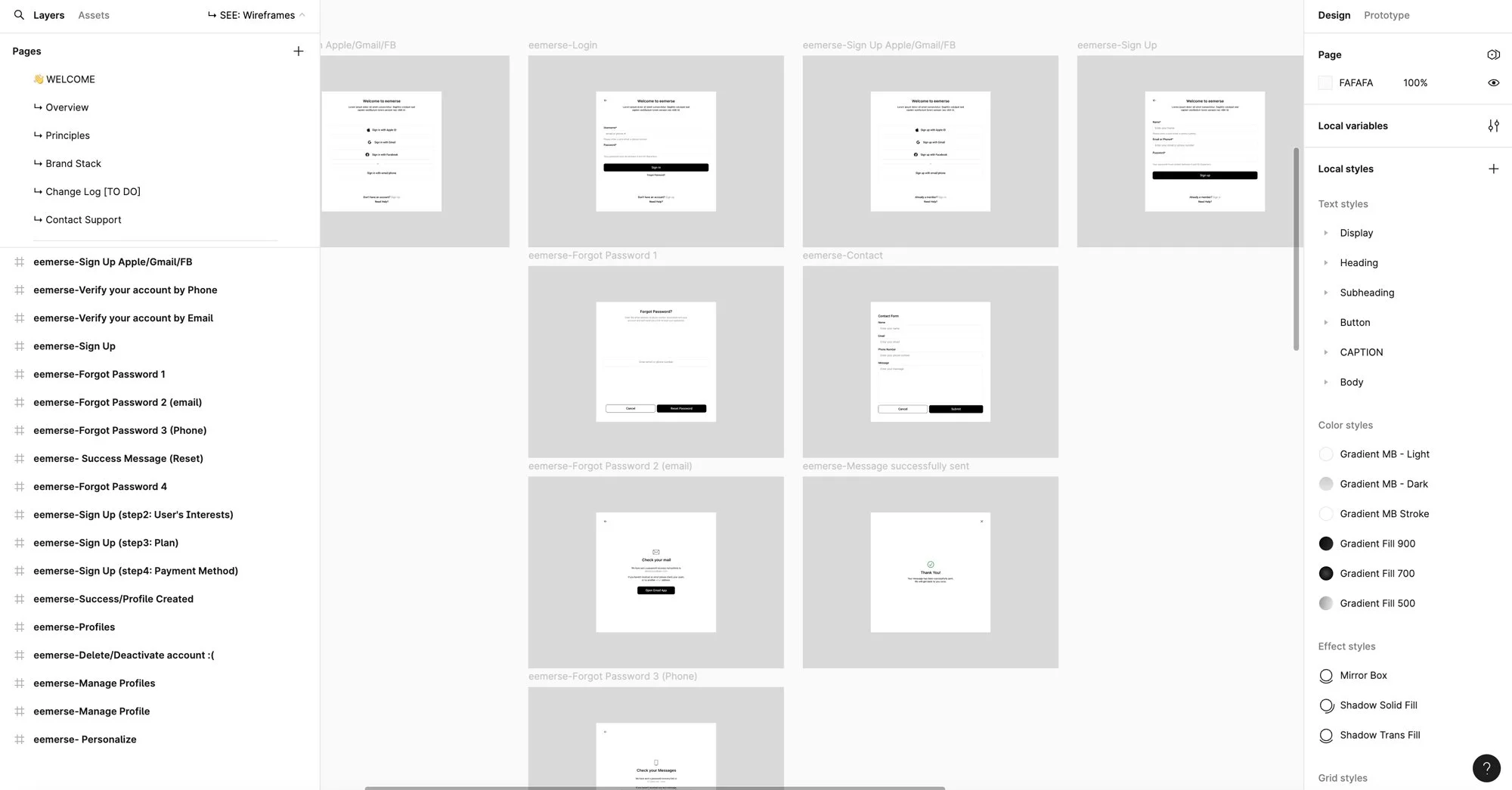
Wireframing and Prototyping
Low-Fidelity Wireframes: Outlined basic structures and layouts.
High-Fidelity Prototypes: Developed interactive prototypes using Figma.
AR/VR Interface Mockups: Specialized designs for immersive experiences.
Testing and Iteration
Heatmaps and A/B Testing
Heatmaps: Tracked user interaction patterns to identify popular elements.
A/B Testing: Compared different interface versions to determine the most effective design.
Results
Floating vs. Fixed Elements: Users preferred a hybrid model that offered both innovation and familiarity.
Navigation Efficiency: Improved by 40% after redesigning the menu structure.
Content Discovery: Time to find immersive content reduced by 35%.
Stakeholder Feedback and Rapid Iteration
Cross-Functional Collaboration: Worked closely with developers, product managers, and marketers.
Stakeholder Meetings: Regular sessions to gather feedback and align on objectives.
Rapid Prototyping: Implemented changes swiftly to keep up with the project timeline.
Optimizing 3D Content Delivery
Cloud-Based 3D Objects
Reduced File Sizes: Achieved a 60% reduction in data usage.
Efficient Streaming: Leveraged cloud computing for smooth playback.
Scanning Technology: Enabled quick conversion of real-world objects into optimized 3D models.
Accessibility and Performance
Responsive Design: Ensured optimal performance across various devices.
Minimal Load Times: Optimized assets to reduce loading times by 50%.
User Control: Provided settings to adjust streaming quality.
Final Design
Key Features
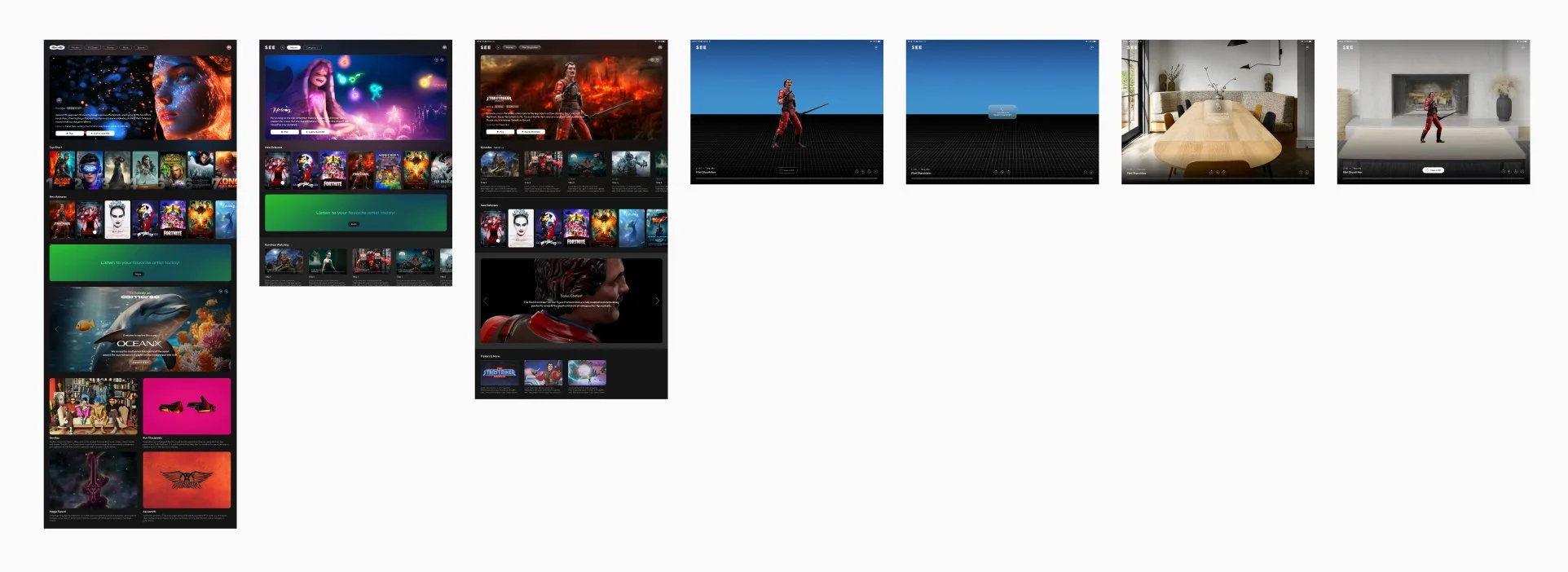
Unified Content Library: Seamlessly browse traditional, AR, VR, and 3D content.
Cloud-Based 3D Streaming: High-quality 3D objects streamed efficiently.
Proprietary Scanning Technology: Unique selling point for investors.
Personalized Recommendations: AI-driven suggestions enhance user engagement.
Immersive Previews: Interactive demos to introduce users to new experiences.
Cross-Platform Support: Accessibility on smartphones, tablets, VR headsets, and smart TVs.
UI Principles Applied
Consistency: Uniform design elements for a cohesive experience.
Simplicity: Minimalist interfaces to reduce cognitive load.
Feedback: Immediate responses to user actions.
Accessibility: Features like voice commands and adjustable text sizes.
Pitching to Investors
Strategy
Data-Driven Presentations: Showcased user research and testing metrics.
Technological Innovation: Highlighted cloud-based 3D streaming and scanning technology.
Market Analysis: Demonstrated the growing demand for immersive content.
Scalability Plan: Explained how the design system supports rapid growth.
User Engagement Metrics: Presented positive feedback from usability testing.
Outcomes
Significant Funding Secured: eemerse reached their funding goal in the first demo.
Potential Collaboration with Apple: High chance of partnership, adding credibility.
Investor Confidence: Strengthened by data-backed strategies and innovative technology.
Conclusion
By applying UX thinking and UI principles, I designed a platform that makes immersive streaming accessible and enjoyable. The use of cloud-based 3D objects and proprietary scanning technology addressed key user concerns about data size and performance. Collaborating with cross-functional teams and stakeholders allowed for rapid iterations, ensuring we met tight deadlines.
Building a comprehensive design system and component library ensured consistency and efficiency, crucial for development and scaling. The project’s success is evident in the significant funding raised and the potential collaboration with industry leaders like Apple.
Next Steps:
Finalize Investor Agreements: Secure additional funding and partnerships.
Prepare for Beta Launch: Implement final adjustments based on feedback.
Continuous Improvement: Ongoing user testing and feature enhancements.
Acknowledgments
Gratitude to all team members, testers, and advisors who contributed to bringing Eemerse closer to reality. Special thanks to the stakeholders for their invaluable feedback and support throughout the project.